
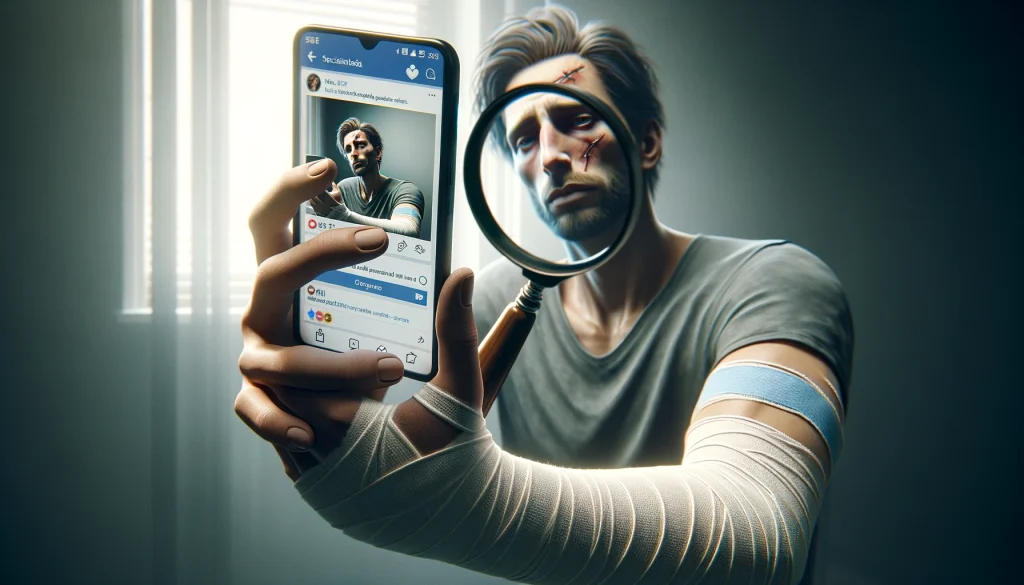
Social media has become integral to our daily lives in today’s digital age. However, when you’re involved in a personal injury case, your online presence can significantly impact the outcome of your claim. As you navigate the complexities of your legal journey, it’s crucial to understand how your social media activity can affect your case and what steps you can take to protect your interests.
Why Your Online Presence Matters in Personal Injury Claims
You might not realize it, but insurance adjusters and defense attorneys are likely scrutinizing your social media profiles as part of their investigation into your claim. Every post, photo, or comment you make could be used as evidence to undermine your case. Here’s why:
- Contradictory Evidence: If you claim severe injuries but post photos of yourself engaging in physical activities, it could contradict your statements about the extent of your injuries[2].
- Credibility Concerns: Your social media posts can be used to question your credibility. For instance, if you claim emotional distress but your posts show you enjoying social events, it might cast doubt on your suffering[3].
- Admissions of Fault: Even seemingly innocent comments about your accident could be interpreted as admissions of liability, potentially damaging your case[2].
How Insurance Companies Are Watching Your Social Media
You should be aware that insurance companies and defense attorneys are actively monitoring social media platforms for information that could be used against you. They’re looking for:
- Photos or videos that contradict your injury claims
- Posts that suggest you’re more active than you’ve claimed
- Comments about your accident or injuries that could be used to challenge your version of events
- Information about your daily activities that might undermine the severity of your claimed injuries[3]
Remember, even if you think your profiles are private, there are ways for investigators to access your information. Nothing you post online is truly private or protected[5].
Social Media Missteps That Can Damage Your Case
To protect your personal injury claim, you need to be aware of common social media mistakes that could harm your case:
Posts That Contradict Your Injury Claims Sharing photos of physical activities or vacations on your social media account can undermine the severity of your injuries in the eyes of the court. For example, claiming a debilitating back injury but posting pictures of yourself hiking could significantly damage your credibility[2].
Unintentional Admissions of Fault: Be cautious about discussing any details of your accident online. A statement like “I didn’t see the other car” could be interpreted as an admission of fault[4].
Updates That Question Your Credibility Posts about your emotional state or daily activities might affect perceptions of your suffering. If you claim severe depression but your social media shows you frequently socializing and enjoying life, it could be used to challenge your mental health claims[3].
Protecting Your Case: Social Media Best Practices
To safeguard your personal injury claim, consider implementing these social media best practices:
Maximizing Your Privacy Settings While not foolproof, adjusting your privacy settings to the highest level can provide some protection. Ensure your profiles are not publicly visible and limit access to your friends only[2].
The Power of Staying Silent During your personal injury case, it is best to minimize your social media activity. Consider taking a break from social media until your case is resolved[4].
Beware of Suspicious Friend Requests During your case, Be cautious about accepting new friend requests. Insurance adjusters or investigators may contact you to gain access to your profiles[2].
Enlisting Your Support Network Inform your friends and family about your case and ask them not to post about your injuries or activities. Remember, their posts can also affect your claim if they mention or tag you[2].
The Legal Risks of Deleting Your Social Media History
You might be tempted to delete potentially damaging posts or your entire social media presence. However, this can be a severe mistake. Deleting content can be seen as destroying evidence, which can have severe legal consequences. Instead of deleting, focus on being cautious with new posts and consult your attorney about handling existing content[3].
Real-World Consequences: Cautionary Tales
To illustrate the potential impact of social media on personal injury cases, consider these real-world examples:
- A former school headmaster lost an $80,000 settlement when his daughter posted about the case on Facebook, violating a confidentiality clause[5].
- A teenager’s TikTok dance videos and posts about sports activities shortly after an accident negatively affected their personal injury settlement[5].
- A man’s workers’ compensation benefits were denied after photos surfaced of him “partying” at a bar, despite the images showing nothing more than him having a beer with a friend[5].
These cases highlight the importance of being extremely cautious with social media posts during a personal injury claim.
How an Experienced Personal Injury Lawyer Can Help
Navigating the complexities of social media during your personal injury case can be challenging. This is where the expertise of a seasoned personal injury attorney, like those at Scott E. Kegel Law Offices, becomes invaluable. Your attorney can:
- Guide managing your social media presence
- Advise you on what to avoid posting and how to handle existing content
- Monitor the opposing party’s social media for information that could support your case
- Protect you from potentially damaging requests for social media information during discovery
Balancing Your Digital Life and Legal Rights: Key Takeaways
As you pursue your personal injury claim, remember these crucial points:
- Assume everything you post online could be seen by the opposing party.
- Be cautious about accepting new friend requests or connections.
- Avoid discussing your case, injuries, or daily activities on social media.
- Consider taking a break from social media until your case is resolved.
- Consult with your attorney before making any significant changes to your social media presence.
By being mindful of your social media activity and following these guidelines, you can protect your personal injury claim and increase your chances of a favorable outcome. Remember, what you share online in the digital age can have real-world consequences for your legal case. Stay vigilant, and let your attorney guide you through managing your online presence while pursuing the compensation you deserve.
Citations:
[3] https://www.bryantpsc.com/the-impact-of-social-media-on-your-personal-injury-lawsuit/
[4] https://phoonglaw.com/how-social-media-can-impact-your-personal-injury-case/